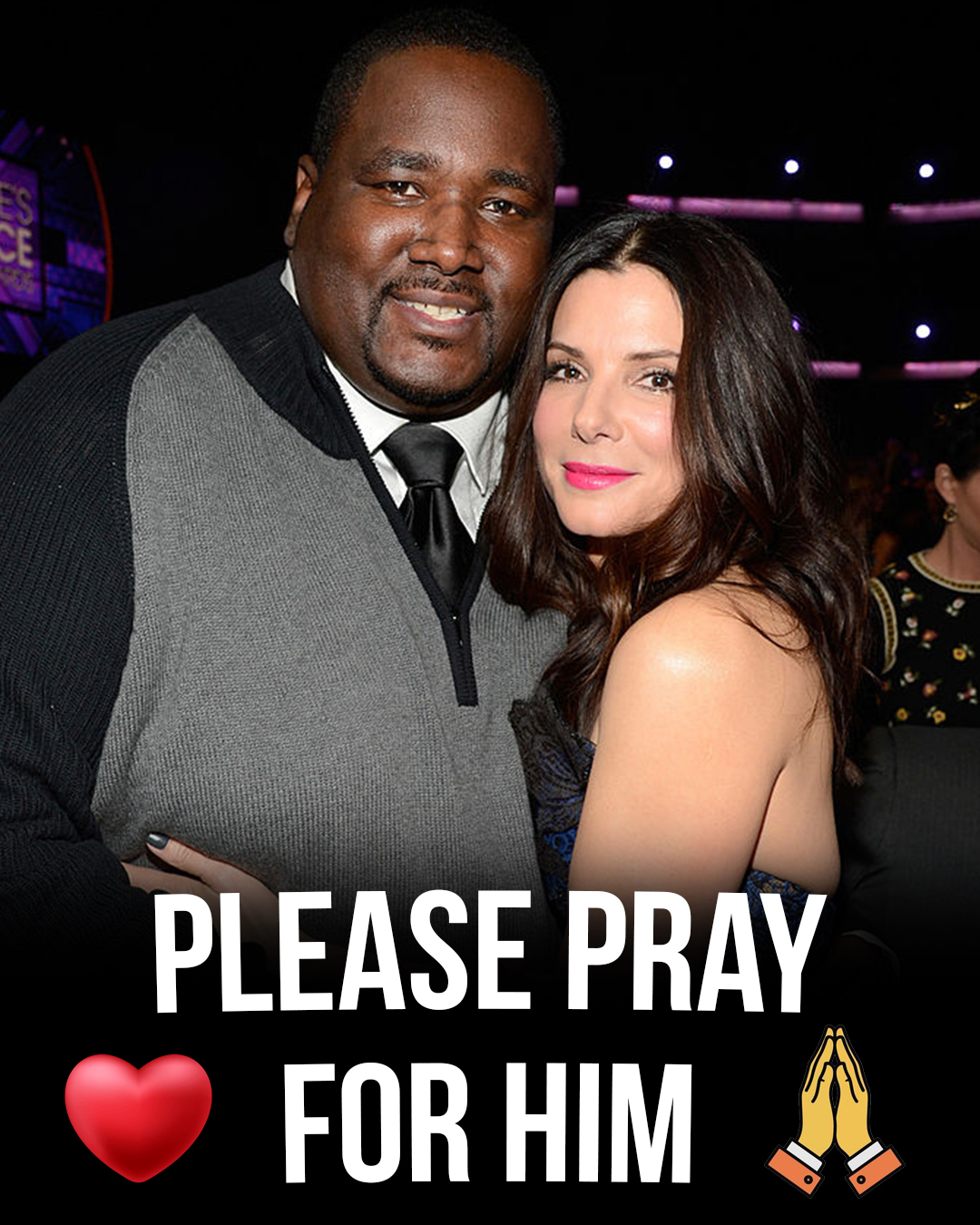
Blind Side star Quinton Aaron on life support following hospitalization!
Quinton Aaron, best known to millions for portraying quiet strength and resilience on screen, is now fighting a far more personal and frightening battle far from the spotlight. The actor has been placed on life support following a sudden and severe medical emergency that left him unable to feel his legs and struggling to survive as doctors work to understand what went wrong inside his body.
The crisis began without warning. According to those closest to him, Aaron was at home when he suddenly lost sensation in his lower body and collapsed. What initially seemed like a neurological episode quickly escalated into a full medical emergency. Paramedics rushed him to the hospital, where he was admitted to intensive care as his condition deteriorated rapidly.
Within hours, doctors determined that Aaron was suffering from a serious blood infection, a diagnosis that raised immediate alarm. Blood infections, particularly when they spread quickly, can overwhelm the body and trigger cascading failures in multiple systems. As his condition worsened, physicians made the decision to place him on life support, buying critical time while they worked to stabilize him and pinpoint the underlying cause.
For his family, the shift was devastating. One moment, he was at home. The next, he was lying in an ICU bed, surrounded by machines, tubes, and the constant beeping of monitors. His wife, Margarita, has described the experience as surreal and terrifying, a blur of medical terminology, urgent conversations, and long hours waiting for even the smallest sign of progress.
“He’s a fighter,” she has said, clinging to the word not as a slogan, but as a truth shaped by years of watching him push through adversity. That belief has become a lifeline as doctors caution that recovery, if it continues, will likely be long and uncertain.
In the early days of his hospitalization, the outlook was grim. Aaron remained largely unresponsive, his body weakened by the infection. Doctors focused on controlling the spread of bacteria in his bloodstream while supporting his vital organs. Family members were warned to prepare for multiple possible outcomes, including permanent mobility loss.
Then came a moment that felt almost miraculous.
Aaron opened his eyes.
Soon after, sensation returned to part of his foot, a small but powerful sign that his nervous system was responding. In the world of critical care, such changes matter enormously. They do not guarantee recovery, but they offer something just as important in the darkest hours: hope grounded in evidence.
For Margarita and the rest of the family, that moment changed everything. It didn’t erase the fear, but it reframed it. Instead of waiting only for bad news, they began watching for progress, however incremental. A twitch. A response. A squeeze of a hand.
Doctors have been careful to temper optimism with realism. Even if Aaron continues to regain sensation and strength, the road ahead may include months of rehabilitation. Specialists have warned that he may require a wheelchair during recovery and will likely need to relearn how to walk, rebuilding muscle strength and neural pathways step by painstaking step.