Chappell Roans Grammys Look Ignites a Fierce Fashion Debate!
The 2026 Grammy Awards red carpet has always served as a high-stakes arena where the worlds of avant-garde art and mainstream celebrity collide, but this year, the atmosphere reached a fever pitch the moment Chappell Roan made her entrance. In an era where digital discourse can make or break a public image in real-time, Roan’s aesthetic choices did more than just turn heads; they ignited a polarized cultural debate that has dominated headlines long after the final “Album of the Year” trophy was polished and packed away. The singer, whose meteoric rise has been defined as much by her sonic landscape as her commitment to visual camp, stepped into the flashbulbs wearing a garment that challenged the very definition of red-carpet decorum.
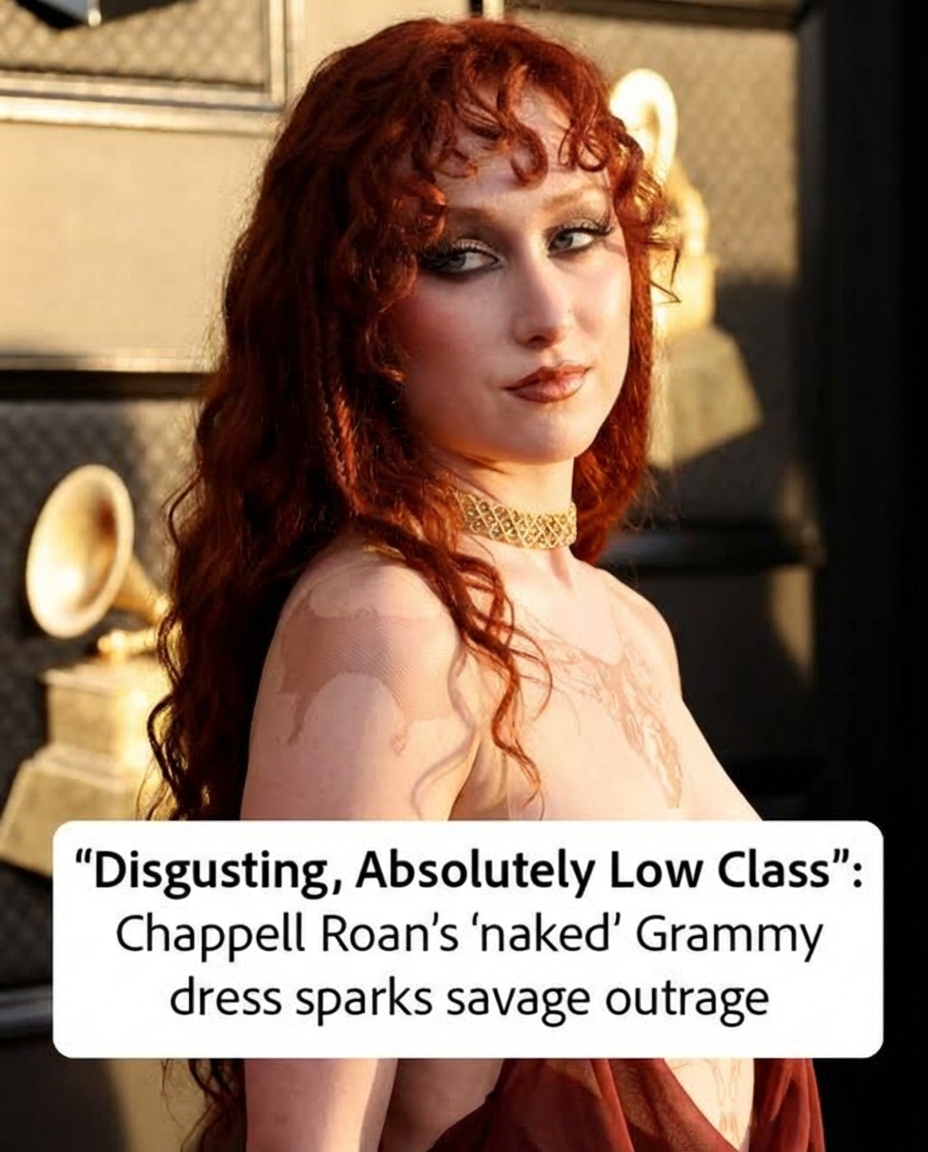
The center of this firestorm was a breathtakingly intricate, sheer maroon gown—a piece of wearable architecture that felt both ancient and futuristic. The garment was a profound homage to the late-1990s archives of the legendary fashion house Mugler, a brand synonymous with theatricality, power, and the subversion of the female form. Reimagined for the 2026 stage by creative director Miguel Castro Freitas, the gown featured the signature Mugler “wasp waist” and dramatic, sweeping lines that evoked a sense of dark, operatic romanticism. For fashion historians and industry insiders, the look was a triumph of archival appreciation. They saw in Roan a muse capable of carrying the weight of high-fashion history, praising the meticulous craftsmanship and the way the deep oxblood hues complimented her porcelain skin and signature fiery curls. To these supporters, the outfit was not merely clothes; it was a statement on the endurance of couture as a medium for storytelling.
However, as the images began to circulate across social media platforms, a sharply different narrative began to emerge. A vocal segment of the public and traditionalist fashion critics were quick to express their disapproval, marking a clear divide in the court of public opinion. The criticism largely centered on the “naked dress” phenomenon that has permeated award shows for the last decade. Critics argued that the sheer, skin-baring nature of the gown was a pursuit of shock value that had finally reached its saturation point. On platforms like X and Instagram, the conversation shifted toward whether such displays are still truly subversive or if they have become a tired trope used to manufacture viral moments. The detractors argued that when spectacle becomes the primary goal, the underlying artistry of the music—the very reason for the ceremony—is inevitably overshadowed.
This backlash tapped into a broader cultural exhaustion regarding red-carpet transparency. In recent years, celebrities have increasingly leaned into ultra-sheer fabrics and daring silhouettes as a symbol of body positivity and creative liberation. While many view this as a celebration of self-governance and the dismantling of archaic modesty standards, others have begun to call for a return to “elegance,” a term often used as a dog whistle for more conservative, opaque styling. The debate surrounding Roan became a microcosm of this larger struggle: Is fashion’s role to push boundaries and provoke discomfort, or is it to provide a polished, aspirational image that respects the formality of the institution?
For Chappell Roan, however, being at the center of a controversy is hardly uncharted territory. Since her arrival on the national stage, she has functioned as a “drag-inspired” pop disruptor, utilizing high-concept costumes to build a world that feels distinct from her peers. To her devoted fanbase, the Grammy look was a natural evolution of her brand. They argued that Roan isn’t just a singer who wears clothes; she is a performance artist for whom the red carpet is an extension of the stage. For them, the sheer maroon gown was a fearless display of confidence and a refusal to play by the rules of a “safe” celebrity image. They viewed the critics not as arbiters of taste, but as gatekeepers who are uncomfortable with a woman claiming space through such an unapologetic lens.
The intensity of the debate has also raised questions about the current state of celebrity styling. As creative director, Miguel Castro Freitas was tasked with bridging the gap between a historic fashion house and a modern pop icon. By choosing a maroon palette over the more traditional black or metallic, he managed to create a look that felt grounded in a specific, moody aesthetic, yet the sheer panels ensured it remained provocative. Some industry analysts suggest that this friction is exactly what the brand intended. In the modern attention economy, a gown that everyone likes is often less successful than a gown that half the people hate and half the people love. By sparking a “fierce fashion debate,” Roan and Freitas ensured that the Mugler name and Roan’s brand were the most searched terms of the night.
Beyond the aesthetics, the conversation has taken on a more philosophical tone regarding the boundaries of award shows. Some cultural commentators suggested that the Grammys should implement clearer dress codes to prevent the “spectacle” from cannibalizing the “artistry.” This argument, however, was met with swift pushback from those who point out that the Grammys have historically been the site of fashion’s most rebellious moments—from Cher’s feathered headdresses to Lady Gaga’s meat dress. To suggest that Roan’s look was “too much” is, in many ways, to ignore the history of the music industry as a vanguard for the weird, the wild, and the provocative.
As the week progressed, the discourse showed no signs of slowing down. Fashion magazines have published long-form essays dissecting the Mugler influence, while daytime talk shows have hosted segments debating the appropriateness of the sheer trend. Meanwhile, Roan has remained largely unfazed by the noise, leaning into the visibility to highlight her musical nominations and upcoming projects. This ability to navigate the storm suggests a high level of media literacy; she understands that in 2026, being “talked about” is a currency that can be traded for longevity and influence.
Ultimately, the debate over Chappell Roan’s Grammy look reveals more about the audience than it does about the artist. It exposes a society still grappling with the intersection of public nudity, high art, and the commercialization of controversy. Whether one views the gown as a masterful nod to fashion history or a desperate plea for attention, it achieved the one thing all great art aims for: it forced a reaction. On a night designed to celebrate the loudest and most impactful voices in music, Chappell Roan proved that she doesn’t even need a microphone to command the room. She succeeded in making the world look, argue, and reflect—and in the high-stakes theater of the red carpet, that is the ultimate win. The maroon gown will likely go down in the annals of Grammy history not for its beauty or its boldness alone, but for its role as a lightning rod in a cultural moment that was ready to strike.