What’s Behind the Super Bowl 60 Controversy: Trump’s Comments, Halftime Politics, and the ICE Debate

By the time Super Bowl 60 kicks off at Levi’s Stadium, it will be far more than a football game. For many Americans, it’s already a flashpoint where sports, politics, immigration, and identity collide in ways impossible to ignore. What was meant to be a carefully staged spectacle has become a mirror reflecting the nation’s tensions, anxieties, and divisions.

In the weeks leading up to the game, a viral NFL graphic—once shrugged off as a quirky coincidence—has taken on a charged symbolism. Labeled “prophetic” online, it feels less like trivia and more like a warning. The Super Bowl, traditionally sold as a unifying ritual, now unfolds against a backdrop no halftime show can erase.


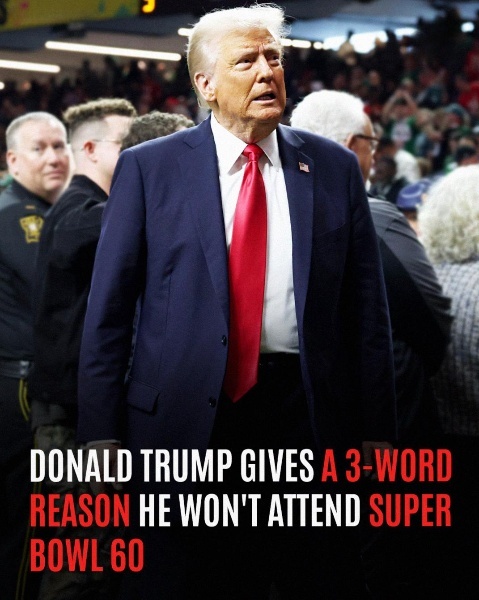
Donald Trump’s public criticism of the event reignited debates that never fully cooled after his presidency. He framed the Super Bowl not as a celebration, but as a symptom of cultural decay and political signaling. Supporters rallied behind him, while opponents accused him of turning a sporting event into another battlefield in America’s ongoing culture wars.
Adding to the tension are reports about potential ICE activity around the stadium. Even the perception of increased immigration enforcement has forced many families in the Bay Area to reconsider attending. Community groups and legal observers have mobilized, setting up hotlines, offering guidance, and reminding residents of their rights. For thousands, attending the game has become a decision weighed against safety and risk.

The controversy intensified when Bad Bunny, one of the most influential artists of his generation, spoke out against the growing politicization. Through pointed statements and cryptic posts, he reminded fans that the Super Bowl—and American culture itself—does not belong to one group alone. His message resonated strongly with younger fans and immigrant communities, though critics accused him of injecting politics into entertainment. By then, the event had already become deeply political, long before his comments.

On the ground, the reactions were varied and human. Some fans stayed home out of caution, not disinterest. Others turned attendance into a quiet act of defiance, coordinating rides and showing up in groups. Cheering from the stands became its own statement.

Bay Area officials faced a delicate balance—ensuring safety without spreading fear, welcoming visitors while acknowledging community concerns. Public messaging emphasized preparedness and legal protections, but it was clear: this Super Bowl was operating in a climate far more complex than the NFL had planned.

Even the matchup itself—Seattle Seahawks versus New England Patriots—adds symbolic weight. Each team carries regional pride, histories, and passionate fan cultures. On the field, they battle for a title. Off the field, the stakes are larger: identity, belonging, and the anxiety of tens of thousands watching closely.

Levi’s Stadium, designed for celebration, now carries a heavier responsibility. Security measures have expanded, coordination intensified, and messaging carefully calibrated. But no amount of planning can erase fear or control perception. Both caution and defiance will coexist in the stands.

Super Bowl 60 is contentious not because of a single factor, but because multiple pressures have converged. Politics, immigration fears, and celebrity influence didn’t arrive overnight—they reflect the country itself. For fans, decisions are personal: whether to bring kids, wear jerseys, or plan exits in advance. Some tailgates now include an extra layer of vigilance alongside food and music.

This is not the NFL’s idealized vision of unity. It is the more honest version: America has changed, and so have its biggest cultural moments. When the first touchdown is scored, the scoreboard will measure yards and points—but it won’t capture the unease, the solidarity, or the quiet courage of fans who show up anyway.

Super Bowl 60 will be remembered not just for who wins, but for who felt welcome, who felt watched, and who had the courage to attend despite it all. In that sense, this game is already historic.

What do you think Super Bowl 60 says about America today? Share your thoughts in the comments below.

Similar Posts

Leave a Reply

Your email address will not be published. Required fields are marked *