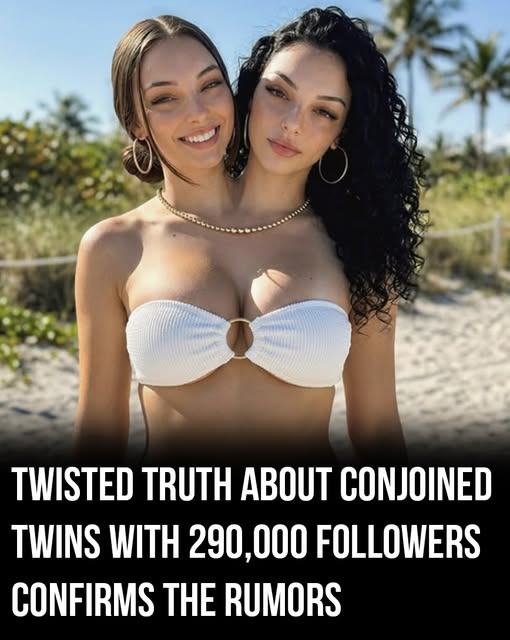
Twisted truth about conjoined twins with 290,000 followers confirms rumors!
In the rapidly evolving landscape of digital media, the line between biological reality and synthetic perfection has become increasingly porous. The latest phenomenon to test the limits of public belief centers on Valeria and Camila, two purportedly conjoined twins who have become an overnight Instagram sensation. Since their debut on December 13, 2025, the pair has amassed nearly 300,000 followers, captivating an audience that is simultaneously mesmerized by their aesthetic beauty and deeply suspicious of their physical existence.
The twins are presented as being joined at the base of the neck, sharing a single, flawlessly sculpted body. Their feed is a curated gallery of high-end lifestyle content: posing in revealing bikinis on sun-drenched beaches, enjoying dinners at upscale restaurants, and lounging with a circle of equally glamorous friends. For many, the account is an inspiring glimpse into the lives of two women navigating a rare medical condition with grace and confidence. For others, it is the opening salvo of a new era of sophisticated digital deception.
As the account’s following surged to 289,000 in early 2026, the skepticism surrounding Valeria and Camila reached a fever pitch. The controversy highlights a growing cultural anxiety regarding Generative AI and its ability to manufacture human identity. Experts and laypeople alike have begun dissecting the imagery with forensic intensity, looking for the tell-tale “glitches” that often betray synthetic origins.
Andrew Hulbert, an AI prompt engineer and consultant who specializes in the integration of artificial intelligence within marketing and business processes, is among the most vocal critics. In an interview regarding the twins’ sudden rise, Hulbert stated that the narrative feels engineered for maximum engagement. “It’s the perfect story of the perfect person to give the perfect result of engagement,” he explained. From a marketing perspective, Valeria and Camila represent the “personification of what the media thinks beauty is.” Their images lack the inherent flaws of the human form—there are no stray hairs, no skin textures that react naturally to light, and no physical inconsistencies that usually accompany rare medical conditions.
The skepticism isn’t limited to professionals. The comments section of their Instagram page has become a battlefield of digital forensics. Skeptics point to the “uncanny valley” effect, where the imagery is close enough to reality to be convincing but “off” enough to trigger an instinctive sense of unease. Users have highlighted background anomalies, such as menus with illegible, distorted text and environmental details that seem to warp from one photo to the next. One follower challenged the duo directly, writing, “If it’s real, go live stream. I know you won’t.”
The demand for a live stream is a common litmus test for AI-generated influencers. While static images and short, filtered video clips can be meticulously edited or rendered using high-end AI tools, real-time interaction remains a significant hurdle for synthetic creators. Maintaining the physical consistency of a complex anatomy—such as two heads on one body—during a live, unscripted broadcast is currently beyond the capabilities of most consumer-grade AI models.