A Thanksgiving Invitation Went to the Wrong Person — The Story That Followed Spanned 10 Years
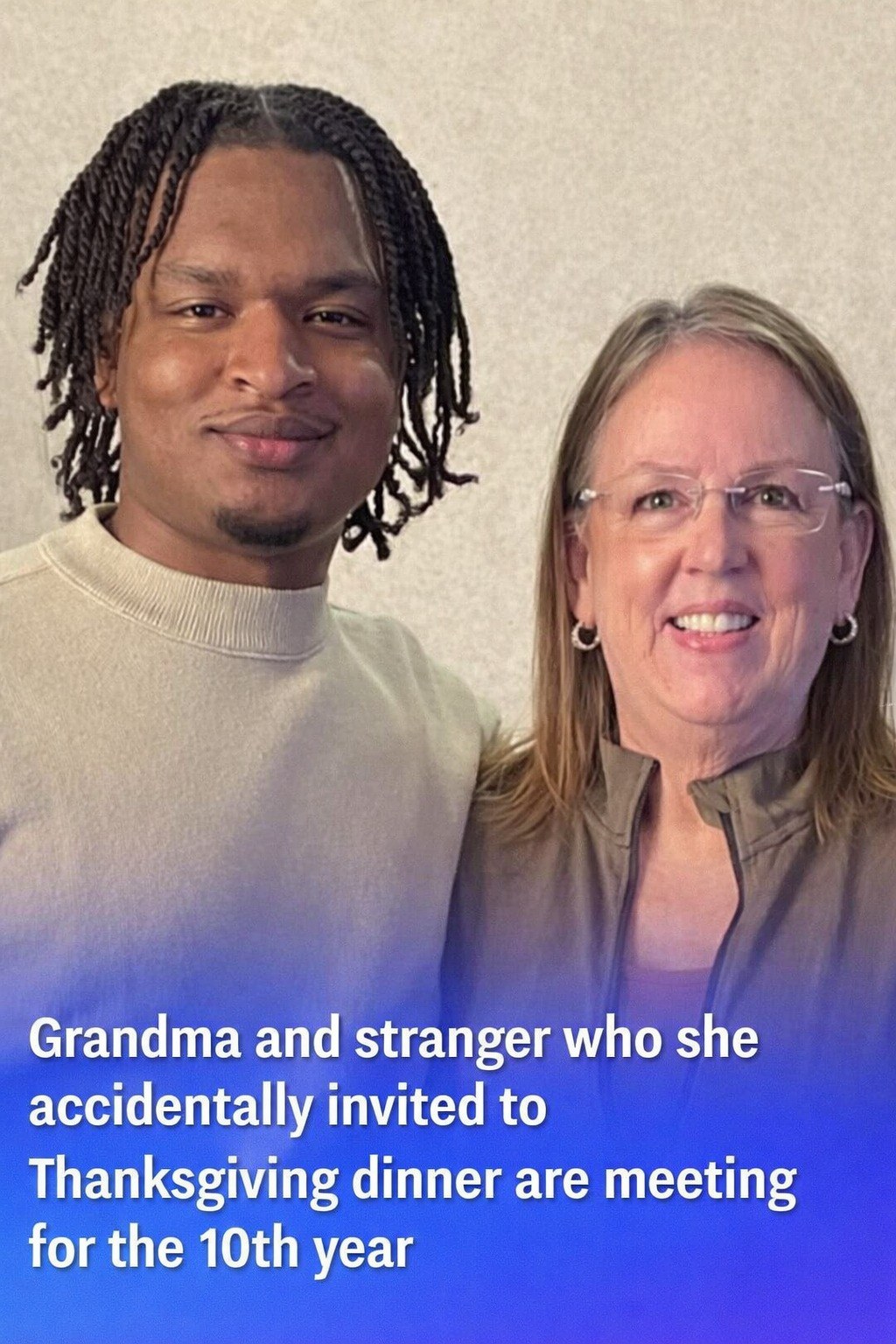
What began as a simple digital glitch has blossomed into perhaps the most enduring and beloved Thanksgiving narrative of the modern era. Nearly a decade ago, the kind of routine mistake that usually ends with a polite “sorry” and a deleted thread instead set the stage for a cross-generational bond that has captivated the world. In late 2016, an Arizona grandmother named Wanda Dench was going about the seasonal business of organizing her family’s holiday plans. She typed out a practical, warm text intended for her grandson, asking about his availability for the upcoming Thanksgiving dinner. It was a message sent millions of times over across the country—a grandmother reaching out to kin. But a single digit error in the phone number redirected the course of her life in a way no one could have scripted. The message didn’t reach her grandson. Instead, it pinged on the phone of Jamal Hinton, who was then a high school student in Phoenix. Naturally confused, Hinton replied to the unknown number, inquiring who was on the other end. Dench, equally baffled, soon realized the lines had crossed. To settle the matter, Hinton asked for a photo to verify if she was, in fact, his grandmother. When Dench sent back a selfie, the mistake became hilariously clear: they were complete strangers. In the fast-paced, often impersonal world of digital communication, the story should have ended right there. Dench offered a quick apology for the intrusion, fully expecting the interaction to vanish into the ether of forgotten “wrong number” texts.
But Hinton, leaning into the humor of the moment, fired back a lighthearted request that would soon become iconic. He asked if he could still come over for a plate of food anyway. It was a joke, a bit of teenage bravado, but what happened next elevated a viral moment into a masterclass in human connection. Rather than dismissing the stranger, Dench responded with a sincerity that felt plucked from a more neighborly era. She told him he was absolutely welcome at her table, famously adding that “grandmas feed everyone.” It was an instinctual response, one rooted not in a desire for publicity—which neither could have predicted—but in a genuine belief in hospitality and the simple power of kindness.
When Thanksgiving arrived, Hinton decided to take the leap. He showed up at Dench’s door, navigating that thin line between uncertainty and hope. For her part, Dench welcomed him with the same open-heartedness she would show her own flesh and blood. What could have been a stilted, awkward encounter was instead a joyful afternoon of laughter, shared food, and the easy rhythm of two people who simply clicked. That first meal wasn’t just a one-off feel-good story; it was the genesis of a tradition neither had planned. Despite the gap in their ages, their differing backgrounds, and the sheer improbability of their meeting, Dench and Hinton found a natural, enduring chemistry. They stayed in touch, checking in on each other’s milestones and life updates, proving that their connection was built on a foundation of real friendship rather than a fleeting internet trend.
As the years rolled by, the annual reunion became a fixture of their lives. Each November, they reaffirmed the trust and affection that had grown between them. The story eventually caught fire online after Hinton shared screenshots of the original exchange, resonating deeply in an era often defined by digital division. Their story stood as a quiet, powerful rebuttal to the idea that strangers are to be feared, showing instead how humor can bridge almost any social chasm. Through the lens of a decade of media coverage, the nature of their relationship has remained remarkably pure. In numerous interviews, both Dench and Hinton have consistently framed their bond as personal rather than performative. Dench has often spoken of the meeting with a sense of providence, expressing a deep gratitude for the “mistake” that she believes was meant to happen. Hinton mirrors this sentiment, noting that while he enjoys knowing their story brings people happiness, it is the friendship itself—not the likes or shares—that he treasures most.
In a world where traditions are often discarded due to busy schedules or shifting circumstances, their commitment to this accidental ritual has become a symbol of continuity. Their story has evolved alongside them; we have watched Hinton grow from a high schooler into a young man, with each Thanksgiving serving as a milestone for both the holiday and their shared history. As they approach the ten-year mark of this tradition, the longevity of their bond highlights a profound truth: small acts of openness can lead to life-altering relationships. What started with a wrong number has matured into a shared history of trust and mutual respect. Dench often reflects on the fact that she never expected a typo to lead to such a significant friendship, while Hinton speaks to the importance of staying open to the unexpected.
Ultimately, the story of Wanda Dench and Jamal Hinton remains a vivid reminder that the most meaningful relationships don’t always follow a predictable path. Sometimes, they begin with a simple error, and they grow because two people were willing to move past the “wrong number” and invite a stranger to pull up a chair. What initially resonated as a charming, one-off feel-good anecdote has matured into a broader cultural touchstone—a symbol of radical kindness in an increasingly digitized and often impersonal landscape. Each time this pair reunites for the November holiday, a tidal wave of renewed interest follows. Global audiences now eagerly await their annual update, seeking confirmation that the tradition remains alive. Consistently, the answer has been a resounding yes. The sheer longevity of their bond is precisely why the story refuses to fade into the digital background. While viral moments typically have the shelf life of a news cycle, this connection has endured because it is anchored in genuine, sustained action rather than a performative click. Dench and Hinton did not simply pose for a calculated photo opportunity; they have returned to the same table year after year, reinforcing the profound idea that kindness is at its most potent when it is consistent.
This unwavering commitment to one another has successfully transformed fleeting public curiosity into deep-seated admiration. Social media remains the primary conduit for these updates, and whenever Hinton posts the latest photo or message marking another year together, the digital response is overwhelmingly positive. Commenters frequently describe the ritual as both comforting and inspiring—a rare beacon of light during eras when global upheaval or personal hardships make the holidays feel fraught with complexity. For many, the narrative serves as a vital reminder that organic human connection can still bloom from the most mundane origins, even a misinterpreted text message. The gravity of their friendship eventually opened doors to share their message on a larger stage. In recent years, Dench and Hinton have leaned into public conversations, interviews, and strategic partnerships that champion the values of gratitude, togetherness, and generosity. One such collaboration saw them working with a major food brand synonymous with family gatherings and holiday traditions.
True to form, this partnership focused on the quiet celebration of shared moments rather than the hollow pursuit of celebrity or spectacle. It was a natural alignment with the values at the heart of their journey. Crucially, both Dench and Hinton have been meticulous in framing these appearances as extensions of their relationship, never as a replacement for it. In every interview, they reiterate that Thanksgiving remains, first and foremost, about the time spent together—honoring the original spirit of that first unintended invitation and marveling at how far a simple act of openness has carried them. The public dimension, however significant, has never managed to eclipse the personal bond that started it all.
Their story has also prompted a deeper reflection on the dual nature of technology. While digital platforms are frequently maligned for fostering social distance, the Dench-Hinton experience highlights the opposite potential. A wrong number, typically dismissed as a minor nuisance, became a gateway to a life-changing connection because two individuals chose curiosity and warmth over indifference. Analysts have noted that this specific element resonates with particular strength in an age defined by snap judgments and fractured attention spans. Perhaps the most compelling reason this tradition continues to inspire is its inherent simplicity. There was no elaborate PR strategy, no viral blueprint, and zero expectation of fame. The decision to invite a stranger to a family dinner was grounded in the kind of everyday hospitality that many recognize from their own upbringings. That familiarity makes the story accessible; it encourages others to consider how small, quiet gestures in their own lives might yield an unexpected, cascading impact.
Over time, these annual reunions have come to symbolize a sense of rare stability. As their lives changed—as careers progressed, responsibilities shifted, and the world itself underwent massive upheaval—Dench and Hinton kept their appointment at the table. Observers frequently point to this consistency as the factor that elevates the story from a pleasant coincidence to a meaningful legacy. It proves that relationships formed in the most unlikely circumstances can be nurtured into something permanent through intention and care. From Dench’s perspective, this decade-long friendship has become a profound source of personal reflection. She has spoken candidly about how the experience bolstered her belief in treating people with openness, even when the outcome is uncertain. For Hinton, the tradition serves as a perennial reminder of the power of humor and receptivity—the very qualities that transformed a moment of digital confusion into a lifelong bond. Both insist that neither could have predicted this result, which is precisely why the narrative feels so authentic to a global audience. As the tradition nears the ten-year milestone, public fascination shows no signs of waning. Each Thanksgiving serves as a quiet, steady milestone, marked not by grand proclamations but by the simple, radical act of showing up. In a media landscape driven by novelty, this consistency sets their story apart. Ultimately, the enduring appeal of Wanda Dench and Jamal Hinton’s Thanksgiving tradition lies in what it represents rather than its accidental origin. It is a reminder that kindness does not require perfection or a prior introduction. Sometimes, it begins with a mistake—and it grows through patience, humor, and an open heart. In a time when many traditions struggle to survive the pressures of distance and social division, this one continues to thrive. Born from a wrong number and sustained by a genuine pulse, it offers a simple but powerful truth: meaningful relationships can emerge from anywhere, and when they do, they are worth showing up for—year after year.