Constitutional Crossroads: Senate to Confront Presidential War Powers Following Maduro’s Ouster
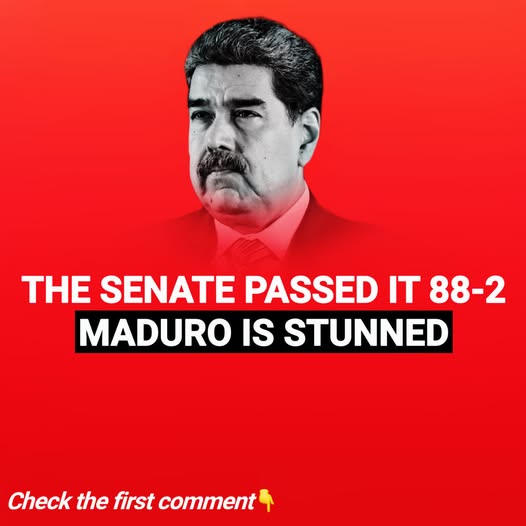
The lightning-fast U.S. military operation that removed Nicolás Maduro from power has done more than just redraw the political map of South America; it has ignited a firestorm within the halls of the U.S. Capitol. While the images of the Caracas raid continue to dominate global headlines, Washington lawmakers are pivotally shifting their focus inward, grappling with a domestic constitutional crisis that could have consequences far outlasting the current Venezuelan transition. The central question haunting the halls of Congress is one of authority: How could an intervention of such immense consequence—the forced removal of a foreign head of state—unfold without a clear, deliberative mandate from the American people’s representatives? The episode has ripped open old wounds regarding the fraying balance of power between the legislative and executive branches, forcing a confrontation over the very nature of America’s democratic identity.
A Forced Reckoning: The Kaine Resolution
At the vanguard of this legislative counter-offensive is Senator Tim Kaine (D-VA). In the wake of the operation, Kaine announced his intention to force a Senate vote on a war powers resolution. The measure is designed to serve as a constitutional “circuit breaker,” explicitly prohibiting further military actions against Venezuela unless they are preceded by formal congressional authorization.
Kaine’s maneuver highlights a growing, bipartisan sense of unease. Even among hawks who long advocated for Maduro’s exit, there is a burgeoning fear that the process—or lack thereof—has set a dangerous precedent. For these lawmakers, the debate has transcended the specifics of the Venezuelan regime; it has become a fundamental dispute over the mechanics of American warmaking.
Invoking the gravity of the nation’s approaching 250th anniversary, Kaine has framed the upcoming vote as a definitive constitutional test. He warned that allowing unilateral executive action to go unchecked risks “normalizing” a model of warfare led solely by the President. Furthermore, he cautioned that such actions threaten to revive a dark history of U.S. interventionism in Latin America that could alienate regional allies for generations. In Kaine’s estimation, bypassing the halls of Congress doesn’t just expedite military goals—it systematically erodes democratic accountability and dismantles the essential safeguards intended by the Framers.
The Long Drift of Executive Might
The current friction is part of a decades-long historical trajectory. Since the mid-20th century, Commanders-in-Chief from both political parties have leaned into increasingly expansive interpretations of Article II powers. While the Constitution grants Congress the sole power to declare war, the executive branch has consistently utilized “police actions,” “limitless authorizations,” and “emergency interventions” to sideline the legislature.
Congress, having spent years yielding ground, now finds itself struggling to reclaim its institutional footing. Kaine’s resolution represents an attempt to halt this executive drift before it becomes an immovable feature of the American presidency.
The High Stakes of Deliberation
The battle lines for the upcoming vote are clearly drawn. Opponents of the resolution argue that in an era of rapid-onset global threats, tethering the President to a slow-moving congressional debate could prove catastrophic, potentially endangering U.S. national security and leaving interests vulnerable.
Supporters, however, counter that the “slowness” of the legislative process is not a defect, but a deliberate constitutional feature. They argue that the requirement for public deliberation acts as a vital check against the reckless or impulsive use of military force, ensuring that the nation only goes to war with the informed consent of its citizens.
As the Senate nears this pivotal vote, the implications extend far beyond the borders of Venezuela. The outcome will serve as a bellwether for the future of war powers governance in the United States. Ultimately, the Senate must decide whether it will reassert its constitutional duty as a co-equal branch of government or continue to cede its authority to an increasingly dominant executive.