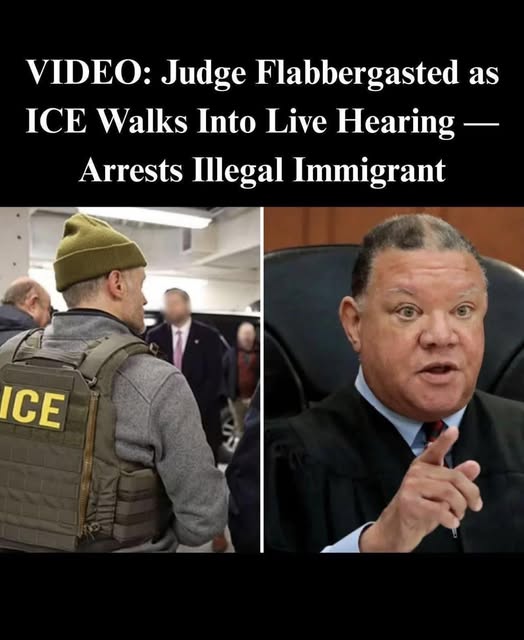
Boston Judge Rules Against ICE Agent for Detaining Defendant Mid-Trial
A Boston judge has found U.S. Immigration and Customs Enforcement (ICE) agent Brian Sullivan in contempt of court after he detained a man in the middle of an ongoing trial, raising significant questions about defendants’ rights, federal enforcement authority, and the limits of local and federal cooperation. The ruling highlights the complex balance between immigration enforcement and constitutional protections within the U.S. justice system.
Courtroom Arrest Sparks Legal Controversy
The incident occurred last week when Wilson Martell-Lebron, a Dominican Republic native living with his family in Massachusetts, was taken into federal custody by Sullivan as he left the Boston Municipal Court. Martell-Lebron was on trial for allegedly making false statements on his driver’s license application, a charge that accused him of misrepresenting his identity. However, Judge Mark Summerville quickly determined that Martell-Lebron’s rights to due process and a fair trial were violated by the arrest during active court proceedings.
“It’s a case of violating a defendant’s right to present at trial and confront witnesses against him,” Judge Summerville stated from the bench. “It couldn’t be more serious.” Following this ruling, Summerville dismissed the charge against Martell-Lebron and filed a contempt charge against Sullivan, signaling the severity of the breach. Suffolk County District Attorney Kevin Hayden is now expected to review the case and decide whether further charges should be pursued against the ICE agent.
Ryan Sullivan, one of Martell-Lebron’s attorneys, condemned the federal agent’s actions. “Law enforcement agents have a job to see justice is done. Prosecutors have a job to see justice is done. There is no greater injustice in my mind than the government arresting someone, without identifying themselves, and preventing them from exercising their constitutionally guaranteed right to a jury trial,” he said.
ICE Enforcement and Local Tensions
The Boston arrest reflects ongoing tensions between federal immigration authorities and sanctuary city policies. Boston has declared itself a sanctuary city, limiting cooperation between local police and federal immigration enforcement. Sanctuary policies are designed to protect undocumented immigrants from deportation, particularly when they have no violent criminal record, and to ensure that individuals feel safe engaging with local institutions.
Federal officials, including former Trump administration border czar Tom Homan, have repeatedly criticized Boston and other sanctuary cities for what they consider obstruction of federal law enforcement. Republican lawmakers have echoed this critique, arguing that city policies can prevent the removal of individuals charged with crimes.
Mayor Michelle Wu, a Democrat seeking reelection, defended Boston’s policies, emphasizing that they are intended to maintain the city as a welcoming environment for immigrants while safeguarding civil liberties. “Boston will remain a city where immigrants and residents alike can rely on our institutions to treat them fairly, without fear of arbitrary enforcement,” she said.
Details of the Arrest
According to testimony, ICE agents apprehended Martell-Lebron quickly, without clearly identifying themselves to court personnel or the defendant. Witnesses reported that he was taken to a federal pickup truck and transported to the Plymouth detention facility. At the time of the arrest, the trial had just begun, with opening statements and the first witnesses scheduled to testify.
Sullivan, the ICE agent involved, argued during a hearing that the Massachusetts State Police and the prosecution were aware of ICE’s plans to detain Martell-Lebron. He maintained that the arrest followed federal policies that allow agents to apprehend undocumented individuals in or near courthouses when credible information suggests the target is present.
However, Judge Summerville’s ruling emphasized that such federal authority does not supersede constitutional rights in an ongoing trial. The judge noted that detaining a defendant mid-trial interferes with the defendant’s ability to confront witnesses, participate in their own defense, and fully exercise rights guaranteed under the Sixth Amendment.
Historical Context and Policy Shifts
The use of ICE enforcement at courthouses has been a controversial issue for over a decade. Under previous administrations, a policy generally restricted arrests at sensitive locations, including schools, hospitals, and places of worship, as well as courthouses, to avoid disrupting judicial proceedings and community trust. The Trump administration reversed many of these limitations, authorizing broader federal action to apprehend undocumented immigrants in or near courts if agents possessed credible information.
This case illustrates the ongoing tension between federal authority and local judicial protection, as well as the practical consequences for defendants who rely on access to legal representation and court proceedings. Critics argue that aggressive federal enforcement in courthouses can undermine the justice system’s integrity and discourage community cooperation with law enforcement.
Legal Analysis and Implications
Legal experts emphasize that Martell-Lebron’s case underscores the importance of due process protections. Arresting a defendant mid-trial could set a dangerous precedent if unchecked, potentially allowing federal agents to interfere with court proceedings across the country. Professor Janet Morales, a constitutional law scholar at Boston University, noted:
“This ruling is a reminder that federal agents must operate within constitutional limits. Even when enforcing immigration law, they cannot violate the defendant’s right to a fair trial. The court is correct to treat this as a serious breach.”
The contempt charge against Sullivan may lead to additional scrutiny of ICE procedures and training, especially concerning interactions with local courts. While it remains unclear whether the agent will face further legal consequences, the ruling sends a clear message: courtroom arrests must respect the sanctity of ongoing judicial proceedings.
Reactions from the Community and Advocacy Groups
Community members and immigrant advocacy groups have expressed strong support for the judge’s decision. Organizations such as the Massachusetts Immigrant and Refugee Advocacy Coalition (MIRA) condemned the arrest as an overreach of federal authority that undermines public trust in both the justice system and law enforcement.
“People should not fear attending court because federal agents might detain them mid-trial,” said Sofia Ramirez, a spokesperson for MIRA. “This ruling reinforces that everyone deserves due process and fair treatment, regardless of immigration status.”
The case has also prompted renewed debate about sanctuary city policies. While federal authorities view such policies as impediments to enforcement, local advocates argue that sanctuary protections are essential to ensuring civil liberties and preventing arbitrary detentions.
Broader Implications for Immigration Enforcement
Martell-Lebron’s arrest illustrates the delicate balance between federal enforcement priorities and constitutional protections. ICE has faced repeated criticism for aggressive tactics in courthouses and other public spaces, which some say erodes community trust and inhibits cooperation with law enforcement.
Legal analysts predict that this ruling could influence how future arrests are conducted, particularly in jurisdictions with sanctuary policies. Courts may increasingly scrutinize federal agents’ actions, and local governments may reinforce policies to protect due process rights for all residents.
The incident also raises questions about coordination between federal and state authorities. Massachusetts State Police confirmed that they did not assist or obstruct the arrest but were aware of the ICE operation. This careful stance highlights the complicated interplay between local enforcement responsibilities and federal immigration priorities.
Conclusion
The Boston courtroom arrest of Wilson Martell-Lebron and the subsequent contempt ruling against ICE agent Brian Sullivan underscores a fundamental tension in the American legal system: balancing federal authority with constitutional protections. By detaining a defendant mid-trial, federal agents overstepped boundaries that judges view as critical to ensuring justice, due process, and public confidence in courts.
As Suffolk County reviews the contempt charge, the case is likely to have long-term implications for federal courthouse enforcement and the rights of defendants across the country. Meanwhile, Boston’s sanctuary policies and Mayor Michelle Wu’s commitment to protecting immigrant communities will continue to play a central role in shaping how such cases are handled in the future.
Ultimately, the ruling serves as a reminder that constitutional rights remain paramount, even in the complex arena of immigration enforcement, and that the judiciary will actively defend those rights when challenged.
The Boston case comes amid a broader national debate about ICE operations in sensitive locations, including courthouses. Federal policy changes under the Trump administration expanded ICE authority, allowing agents to make arrests in or near courts when they have credible evidence of an individual’s presence. Critics argue this approach risks interfering with judicial independence and the constitutional rights of defendants, particularly in jurisdictions that prioritize community trust and due process protections.
Courthouse arrests are especially controversial because courts serve as neutral spaces where citizens can access justice safely. The American Bar Association and other legal organizations have repeatedly emphasized that aggressive federal enforcement in courtrooms can undermine the fairness of trials, create intimidation for witnesses and defendants, and erode public confidence in the justice system. Some attorneys have raised concerns that undocumented individuals may avoid attending court hearings, reporting crimes, or cooperating with investigations if they fear federal detentions mid-proceeding.
Legal Safeguards and Future Oversight
The contempt ruling against Agent Sullivan may serve as a precedent for future cases. Judges across the country may reference this decision when evaluating federal arrests that interfere with ongoing proceedings. Legal scholars note that contempt charges against law enforcement officers are rare, highlighting the seriousness of the violation.
Experts also suggest that ICE could revise its training protocols to prevent similar incidents. Enhanced communication with local prosecutors, courts, and law enforcement agencies may help ensure arrests occur in a manner consistent with defendants’ rights and ongoing judicial processes.
Community Impact and Broader Lessons
For immigrant communities, the case reinforces the importance of sanctuary protections and legal representation. Local advocacy groups are using the ruling to educate residents about their rights and to emphasize the role of legal support in protecting constitutional protections. While federal authorities maintain the ability to enforce immigration laws, the judiciary has made clear that due process cannot be compromised—even for individuals facing federal immigration enforcement.
The case exemplifies the delicate balance between federal authority, local policy, and individual rights—a balance that will likely shape immigration enforcement and courtroom procedures for years to come.