Woman killed by ICE agent in Minneapolis identified — what we know about her
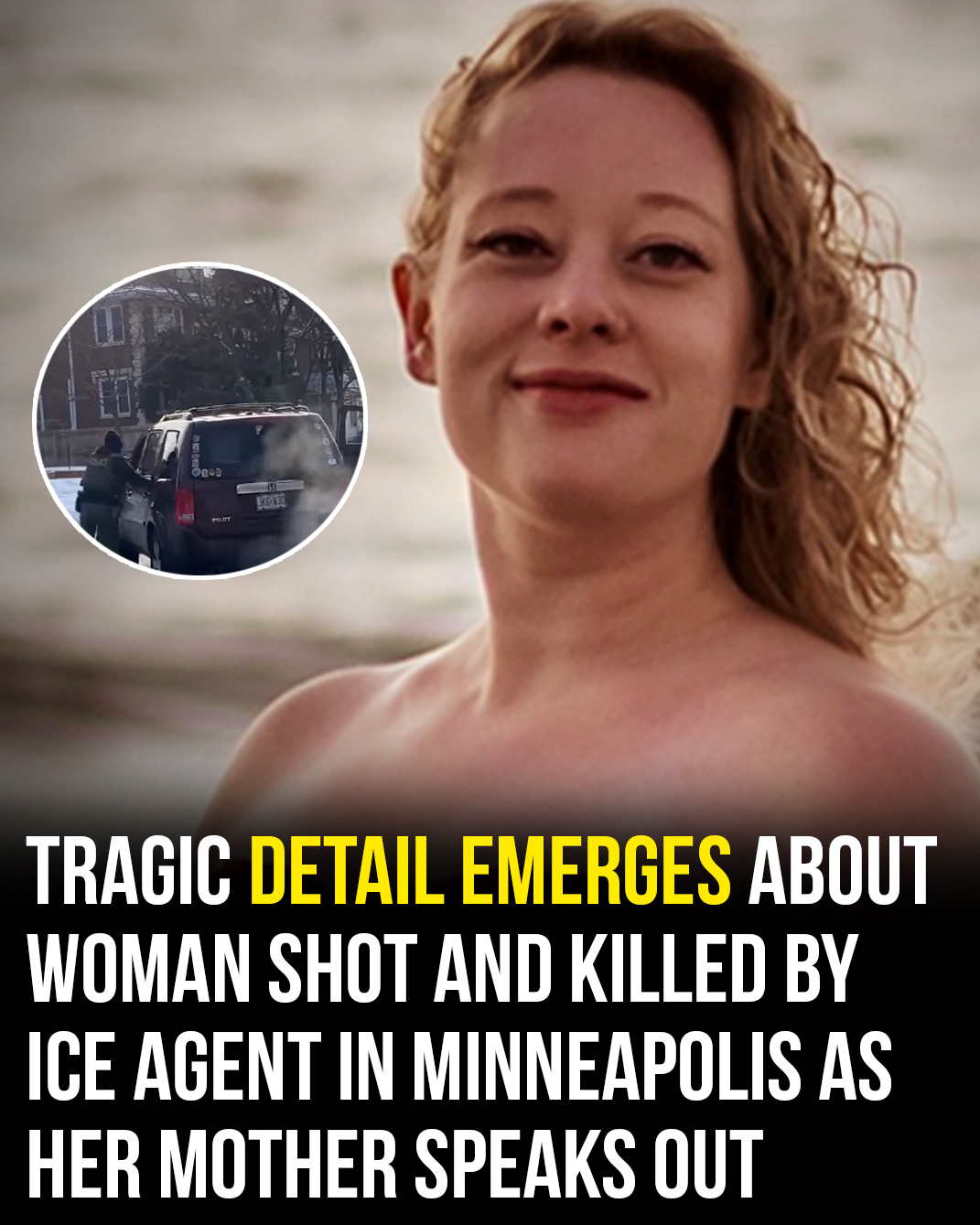
The city of Minneapolis is currently grappling with the volatile aftermath of a fatal shooting involving a federal Immigration and Customs Enforcement (ICE) agent, an incident that has ignited a firestorm of outrage stretching far beyond the borders of Minnesota. The victim has been identified as 37-year-old Renee Nicole Good—a poet, mother, and vibrant member of the local community. Her death has left a wake of heartbreak among friends, family, and neighbors, who describe her as a gentle soul caught in a moment of unimaginable violence. The tragedy took place on the morning of Wednesday, January 7, 2026, in a residential area of South Minneapolis. Federal immigration authorities were reportedly in the neighborhood conducting what they described as a “targeted operation.” However, the routine nature of the mission shattered when gunfire erupted in broad daylight. Bystander video footage, which has since proliferated across digital platforms, captures a burgundy SUV being swarmed by law enforcement personnel. Moments later, the sharp crack of gunshots echoes through the air. The vehicle is seen lurching forward, eventually losing control and crashing into a light pole and several parked cars. Chillingly, images from the scene show a clear bullet hole centered in the driver’s side windshield.
A Stark Conflict of Accounts: “Self-Defense” vs. “Public Murder”
In the hours following the shooting, the Department of Homeland Security (DHS) moved quickly to frame the narrative. According to federal officials, ICE agents were confronted while performing their duties. A spokesperson for the department characterized the situation as a direct threat, alleging that Good had “weaponized her vehicle” in a deliberate attempt to strike federal officers.
DHS maintains that the agent who fired the fatal rounds acted strictly in self-defense, prioritizing his own life and the lives of his colleagues in a high-pressure situation.
“An ICE officer fearing for his life, the lives of his fellow officers and the lives of the public, fired defensive shots, used his training and saved his own life and that of his fellow officers,” stated DHS spokesperson Tricia McLaughlin. “The alleged perpetrator was hit and is deceased. Thankfully, the ICE officers who were hurt are expected to make full recoveries.”
However, this federal justification has been met with fierce resistance from Minneapolis city officials, local politicians, and a grieving community. Critics who have reviewed the available footage argue that the vehicle appeared to be attempting to navigate away from the confrontation rather than serving as a weapon.
City Leadership Demands Accountability
The rift between local and federal authorities has rarely been more pronounced. Members of the Minneapolis City Council have stepped forward in a unified front, issuing a scathing statement that identifies Good not as a “perpetrator,” but as “a member of our community.”
The council’s statement demanded immediate transparency and a full accounting of the tactical decisions made by the federal agents on the scene. As the city braces for continued protests, the debate over ICE’s presence in “sanctuary cities” and the threshold for lethal force has once again been thrust into the national spotlight.
For those who knew Renee Nicole Good, the official department rhetoric stands in jarring contrast to the woman they loved—a mother whose life was cut short on a Wednesday morning, leaving a family to navigate a future defined by a single, violent encounter with federal law enforcement.
The fallout from the fatal shooting of 37-year-old Renee Nicole Good has reached a fever pitch in Minneapolis, as city leaders and family members issued a blistering rebuke of the federal agents involved. In a rare and unified stand against federal authority, the Minneapolis City Council released a statement that stripped away the bureaucratic language of “targeted operations,” instead characterizing the incident as a “public murder.”
“This morning an ICE agent shot and killed Renee Nicole Good, a member of our community,” the council’s statement declared. “Anyone who kills someone in our city deserves to be arrested, investigated, and prosecuted to the fullest extent of the law.”
The council’s demand for criminal prosecution follows a day of raw emotion and escalating tensions. Mayor Jacob Frey, visible in his anger and grief, did not mince words during a Wednesday press conference, explicitly ordering ICE officers to leave the city immediately. The Mayor’s directive marks a total breakdown in cooperation between local and federal law enforcement, a rift that deepened further as new, disturbing allegations surfaced from the scene.
Minnesota State Senator Omar Fateh took to X to share reports that have horrified the community: witness accounts suggesting that federal agents actively blocked a physician at the scene from performing potentially life-saving CPR on Good as she lay dying in her vehicle. While these reports remain under investigation, they fueled the atmosphere of outrage as Fateh, Frey, and a coalition of city council members and local faith leaders gathered at the Portland Avenue shooting site just hours after the gunfire ceased.
A Mother Mourns: “She Was Probably Terrified”
As the political storm rages at City Hall, a family is left to grapple with a shattering personal loss. Renee Nicole Good’s mother, Donna Ganger, confirmed her daughter’s identity to the Minnesota Star Tribune, describing a state of profound disbelief.
“That’s so stupid” that she was killed, Ganger said, her grief punctuated by the absurdity of the violence. “She was probably terrified.”
Ganger was adamant in correcting the narrative put forth by the White House and the Department of Homeland Security, which labeled her daughter a “professional agitator.” Ganger emphasized that Renee was not an activist and had no involvement in the protests that had been tracking ICE agents throughout the week.
“Renee was one of the kindest people I’ve ever known,” Ganger said. “She was extremely compassionate. She’s taken care of people all her life. She was loving, forgiving and affectionate. She was an amazing human being.”
A Legacy Left Behind
The human cost of the shooting is most poignantly felt in the future of Good’s six-year-old son, who she had dropped off at school just minutes before the encounter. Following the death of her second husband, Timmy Macklin Jr., in 2023, Renee had been the primary anchor for the child.
Timmy Ray Macklin Sr., the father of Good’s late husband, spoke of his urgent concern for his grandson’s welfare. “There’s nobody else in his life,” Macklin said, vowing to travel to Minneapolis immediately. “I’ll drive. I’ll fly. To come and get my grandchild.”
In the South Minneapolis neighborhood where she lived, the sentiment was one of communal loss. Neighbors described the Goods as a warm, close-knit family who were deeply woven into the fabric of the block. As a makeshift memorial of flowers and candles continues to grow near the intersection of 34th Street and Portland Avenue, the city of Minneapolis stands as a community divided from its federal government—and united in its grief for a neighbor.
In the quiet residential pockets of South Minneapolis, Renee Nicole Good was known less as a political figure and more as a fixture of the neighborhood—a familiar face often seen alongside her young son. Mary Radford, 27, who lived next door to the family, spoke through the fog of grief about the loss of the woman she described as a “beautiful” presence in the community.
“It’s a beautiful family. They have a son. He’s very sweet,” Radford remarked, reflecting on the routine interactions that have now been permanently severed. “We’re gonna miss seeing them—forever. It is so painful to think about how he’s gonna fare in his life. And I just can’t even imagine what that family is going through.”
As investigators and the public alike pore over the details of the shooting, some logistical questions have surfaced regarding the vehicle Good was operating at the time of the fatal encounter. According to reporting from KSHB 41 News, the burgundy SUV driven by Good bore Missouri license plates. The station confirmed through the Missouri Department of Revenue that the vehicle was officially registered to Renee N. Good Macklin at a Kansas City, Missouri, address. While Good had established a life in the Twin Cities, it remains unclear why the vehicle’s registration had not yet been updated to her current state of residence.
A Voice Silenced: Poet, Musician, and Mother
Beyond the headlines of the shooting, a portrait is emerging of a woman deeply rooted in the arts and academia. An Instagram account attributed to Good offered a humble self-description: a “poet and writer and wife and mom and shitty guitar strummer from Colorado; experiencing Minneapolis, MN.”
Her literary talent was not merely a hobby but an award-winning pursuit. In 2020, while studying creative writing at Old Dominion University, Good was recognized with the institution’s undergraduate poetry prize for her work, On Learning to Dissect Fetal Pigs. It was this intellectual depth that friends say defined her, alongside a reputation for profound generosity toward those in her orbit.
Megan Kocher, a friend who had visited the Good home just weeks before the tragedy, recalled an afternoon that stood in stark contrast to the violence of Wednesday morning.
“She fed me tea and cookies at her house while we talked about school stuff,” Kocher said. “She was such a warm and loving mother. This is tragic beyond words.”
As the city of Minneapolis continues to reel, the focus remains on a six-year-old boy who has lost his mother, and a community that has lost a voice that sought to find beauty in the written word.

As the sun set over the grieving neighborhood, the flickering light of hundreds of candles illuminated a community in mourning. At a vigil held in Renee Nicole Good’s honor, the silence of the evening was broken by the rhythmic chanting of her name, a collective cry for justice from the hundreds of residents who gathered to pay their respects.
Throughout the evening, a succession of speakers took to the podium to underscore the qualities that defined Good’s life: her innate kindness and her unwavering devotion to those living alongside her. Among those who spoke was Jaylani Hussein, the executive director of the Council on American-Islamic Relations’ Minnesota chapter (CAIR-MN), who framed her death as a consequence of her communal spirit.
“She was peaceful, she did the right thing,” Hussein told the somber crowd. “She died because she loved her neighbors.”