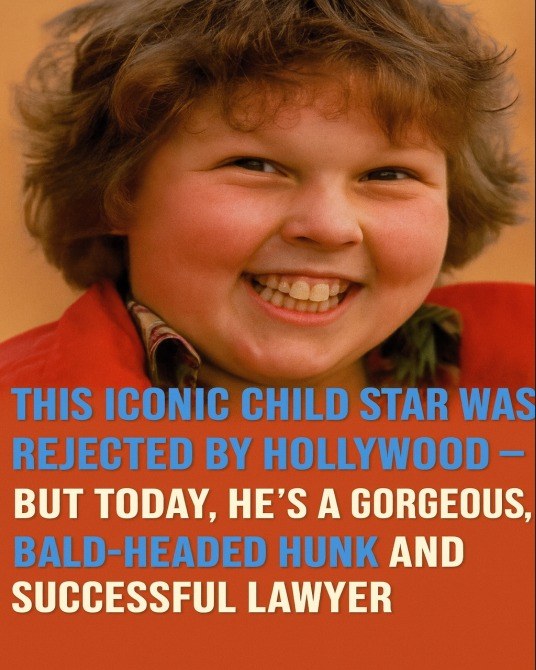
From Young Star to Skilled Lawyer! A Story of Transformation and Perseverance

Some childhood stars spend their adult lives chasing a spotlight that no longer shines the same way. Others recognize early that fame is a moment, not a guarantee, and choose to build something sturdier beneath it. Jeff Cohen belongs firmly in the second group. His journey from a beloved movie character to a respected legal professional is not a story of loss or retreat, but one of intention, discipline, and reinvention.

Cohen became a household name in the mid-1980s after his unforgettable performance as Chunk in The Goonies. The role demanded more than slapstick humor. It required vulnerability, emotional range, and a fearless willingness to look foolish for the sake of the story. Cohen delivered all of it effortlessly. Audiences didn’t just laugh at Chunk—they recognized something honest and human in him. That authenticity is why the character endured long after the credits rolled.
Behind the scenes, however, Cohen’s experience was far from carefree. Even as a child, he dealt with health challenges and the intense pressures that come with professional acting at a young age. Long hours, public scrutiny, and expectations well beyond his years forced him to mature quickly. Instead of becoming embittered or careless, he approached his work with professionalism and focus. Fellow actors and crew members later recalled a young performer who showed up prepared, treated others with respect, and took the job seriously.

As adolescence arrived, reality shifted. Hollywood is rarely kind to child actors once their youthful image no longer fits the roles being written. Physical changes, typecasting, and an industry that prefers familiarity over growth narrowed Cohen’s opportunities. Casting directors struggled to see him as anything other than the character that made him famous. For many former child stars, this stage becomes a painful tug-of-war between identity and expectation.

Cohen made a different calculation. Rather than forcing himself into an industry that no longer fit, he stepped back and asked a harder question: who did he want to become without the camera watching? The answer led him away from auditions and toward education.

Academics became his proving ground. He immersed himself in learning, discovering satisfaction in intellectual challenge and personal growth. College offered something Hollywood never could: anonymity. It allowed him to explore leadership, athletics, and scholarship without being reduced to a childhood role. For the first time, success wasn’t measured by applause or box office numbers, but by discipline, curiosity, and effort.

That shift was not accidental. Mentorship played a key role in helping Cohen reframe his future. A trusted figure from his early career recognized that his experiences in entertainment—contracts, negotiations, power imbalances—were not liabilities but assets. The entertainment industry, after all, is built on legal agreements, and few people understand its human costs better than those who lived inside it as children.

Law became the bridge between Cohen’s past and his future. He approached legal studies with the same commitment he once brought to acting, excelling academically and earning advanced credentials. His background gave him a rare advantage: he didn’t just understand contracts on paper, he understood how they felt in real life. He knew the pressure young performers face, the confusion families experience, and the consequences of poorly negotiated deals.

As an entertainment attorney, Cohen built a reputation for precision, fairness, and empathy. His work spans contract negotiation, intellectual property protection, licensing, and advocacy for creative professionals navigating a notoriously complex industry. Clients trust him not only because he knows the law, but because he understands the stakes. He speaks the language of artists and executives alike, translating between creativity and commerce with clarity and respect.

What sets Cohen apart is his refusal to dismiss his past. He doesn’t treat his acting career as an embarrassment or a novelty. Instead, he acknowledges it as foundational. His continued friendships with former castmates reflect humility and loyalty, as well as gratitude for the experiences that shaped him. He honors the role that introduced him to the world without allowing it to define his limits.

Cohen’s life underscores a truth that is often ignored in conversations about fame: early success is not the same as lasting fulfillment. Fame can open doors, but it cannot sustain purpose on its own. Without education, adaptability, and self-awareness, it can leave people stranded when attention fades. Cohen avoided that trap by investing in himself rather than his image.

His story offers a blueprint not just for former child actors, but for anyone facing a major life transition. Reinvention does not require erasing who you were. It requires understanding what you learned, what still matters, and where your values can do the most good. Cohen leveraged his unique history into a profession that allows him to protect others, shape fair outcomes, and influence an industry that once shaped him.

Today, Jeff Cohen is respected not only for a role that defined a generation, but for a career that demonstrates integrity, intelligence, and purpose. He stands as proof that success is not a single act, but a series of choices made over time. The spotlight may have dimmed, but what replaced it is something far more durable: a meaningful life built on growth, service, and self-definition.

In the end, Cohen’s journey shows that transformation is not a fallback plan—it can be the main event. Early recognition may introduce someone to the world, but it is perseverance, education, and courage that determine the legacy they leave behind.

Similar Posts

Leave a Reply

Your email address will not be published. Required fields are marked *