My Neighbor Turned My Garden Into Her Dumpster, so I Brought Her a Gift She Will Never Forget
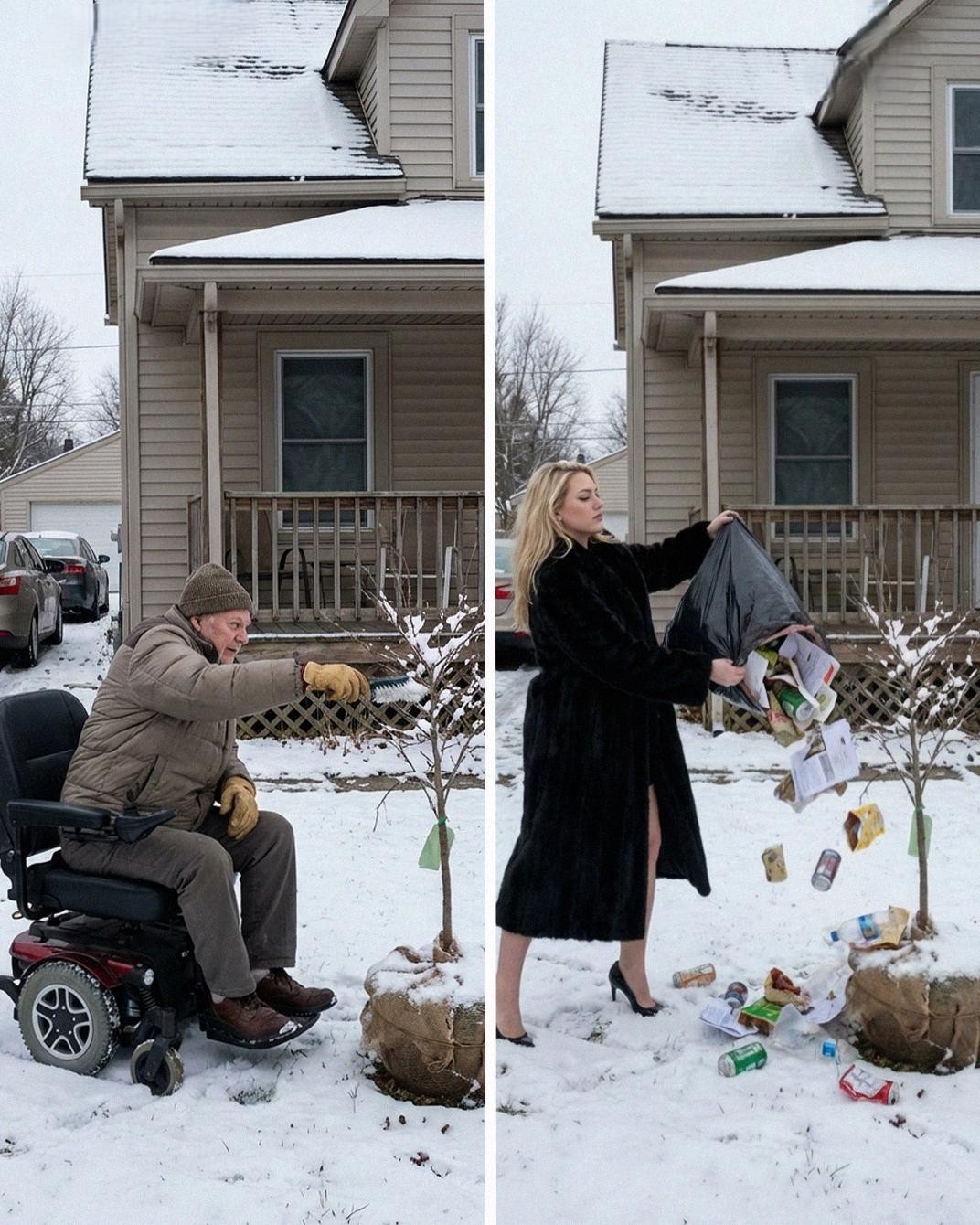
I’m seventy-three, retired, and in a wheelchair, and if you think that means my life got smaller, you’ve got the wrong picture.
My world didn’t shrink. It just moved.
It moved into the little yard out front—the strip of earth I can still shape with my own hands, the place where I can see the seasons changing even when my body doesn’t cooperate. Two young maples stand like skinny sentries by the walkway. Three old evergreens line the side, thick and dependable. And along the fence I’ve got a garden bed I fuss over the way some people fuss over grandkids.
Even in winter, I’m out there. I wrap the saplings so the bark won’t split. I brush snow off the evergreens so the branches don’t break. I salt my path in clean, careful lines. I fill the bird feeder every morning, and the finches and cardinals show up like they’re clocking in for a shift.
That yard is my peace. My proof that I’m still here and still capable of taking care of something.
So when the trash started showing up, it didn’t feel like litter. It felt like disrespect with a heartbeat.
At first it was small enough to blame on the wind or the neighborhood kids. An empty energy drink can half-buried in the snow by my steps. A greasy takeout bag sitting like an insult in front of my porch. A wad of napkins stuck in my shrubs, damp and gray.
I grumbled, picked it up, and told myself it would stop.
It didn’t.
Plastic forks. Crumpled receipts. Cigarette butts ground into the edge of my walkway. Always on the same side. Always near the property line with the rental house next door.
That’s where the new tenant lived.
She moved in a few months back. Late twenties, maybe. Nice car, nice phone, nice clothes—everything polished on the outside. She walked like sidewalks were made for her and everyone else was just background. Always on speakerphone, voice and music blaring, laughing loud like the world owed her an audience.
No wave. No hello. If she looked at me at all, it was the way you look at a mailbox.
I kept picking up the trash anyway. Not because I was scared. Because I’ve lived long enough to know some battles cost more than they’re worth.
Then we got a heavy snow.
The kind that comes down thick and quiet and makes the world look fresh again. In the morning, my yard was a postcard—clean white drifts, the maples dusted like powdered sugar, the evergreens wearing little caps of snow.
I rolled out with coffee in the cup holder and a broom across my lap, ready to start my routine. I turned the corner toward the maples and stopped so hard my chair jolted.
Under those two young trees, someone had dumped an entire trash can.
Not the bag. Not the neat bundle. The whole rotten, loose guts of it, scattered across the snow like a deliberate act. Coffee grounds, wet paper towels, sticky wrappers, food scraps, chicken bones, something dark and slimy I refused to inspect. It splattered up my tree guards and soaked into the clean snow. The smell hit me a second later—rot and sour beer, sharp enough to make my eyes water.
I sat there staring at it, feeling my patience drain out in one clean pour.
Then I followed the proof.
Footprints crossed from the neighbor’s side gate straight to my trees and back again. Fresh, clear tracks stamped in the snow like a confession.
I rolled to her front door and knocked.
When she opened it, she didn’t say hello. She stood there in leggings and a cropped hoodie, hair in a messy bun, phone in her hand like it was glued to her palm. She squinted at me as if I was a spam call.
“Morning,” I said. “I need to talk to you about your trash.”
Her eyebrows rose. “My what?”
“The trash you dumped under my trees,” I said, keeping my voice steady. “It’s all over my yard.”
She stared for a second, then shrugged like I’d told her the sky was blue.
“So?” she said.
I blinked once, slow. “It’s on my property. I can see your footprints.”
She rolled her eyes. “It’s outside. Relax. It’s just trash. Clean it up.”
There it was. Clean it up. Like I was hired help.
I kept my hands in my lap because I could feel them wanting to clench. “Those trees are young,” I said. “You can’t just dump garbage on them.”
She leaned on the doorframe and finally looked me up and down. Her eyes dropped to the wheelchair and she smiled—not friendly. Sharp.
“You’re out there every day anyway,” she said. “Rolling around, poking the dirt. You act like your little yard is a full-time job.”
“It is,” I said. “It’s how I stay—”
She cut me off with a bored wave. “Yeah, yeah. Look, Grandpa, you’re retired. You’ve got all the time in the world. If my trash bothers you so much, take it with yours. Win-win.”
For a second I thought I misheard her.
“Come again?” I said.
“You heard me.” She said it like it was obvious. “What’s so bad about taking out my trash too? You’re bored.”
It wasn’t only what she said. It was how easy it was for her. How natural it felt, treating my time and my space like they didn’t count.
I took a breath. Then another.
Then I smiled.
Not the polite smile. The one that means the conversation is over and something else is beginning.
“Of course,” I said quietly. “You’re right. I shouldn’t have bothered you.”
Her smug grin grew. “Knew you’d get there,” she said, and she shut the door in my face.
I sat on her porch for one beat, letting the cold clean out the heat in my head.
Then I rolled home focused, not furious.
Because she didn’t know the part that mattered.
The owner of that rental house is Tom—my oldest friend. We grew up on this street. Built dumb treehouses. Broke his mother’s good dishes once playing football inside. He moved away but kept the place as a rental because he loved the neighborhood and he loved this block.
And he loves that yard of mine, too, because he’s watched me take care of it for decades.
The first week her trash appeared, I took pictures. The second week, more. By the third, I had a folder. Dates. Times. Close-ups. Wide shots. Footprints in the snow. The kind of evidence that doesn’t argue or negotiate.
I printed the best ones in color, stacked them neatly, and wrote a simple note.