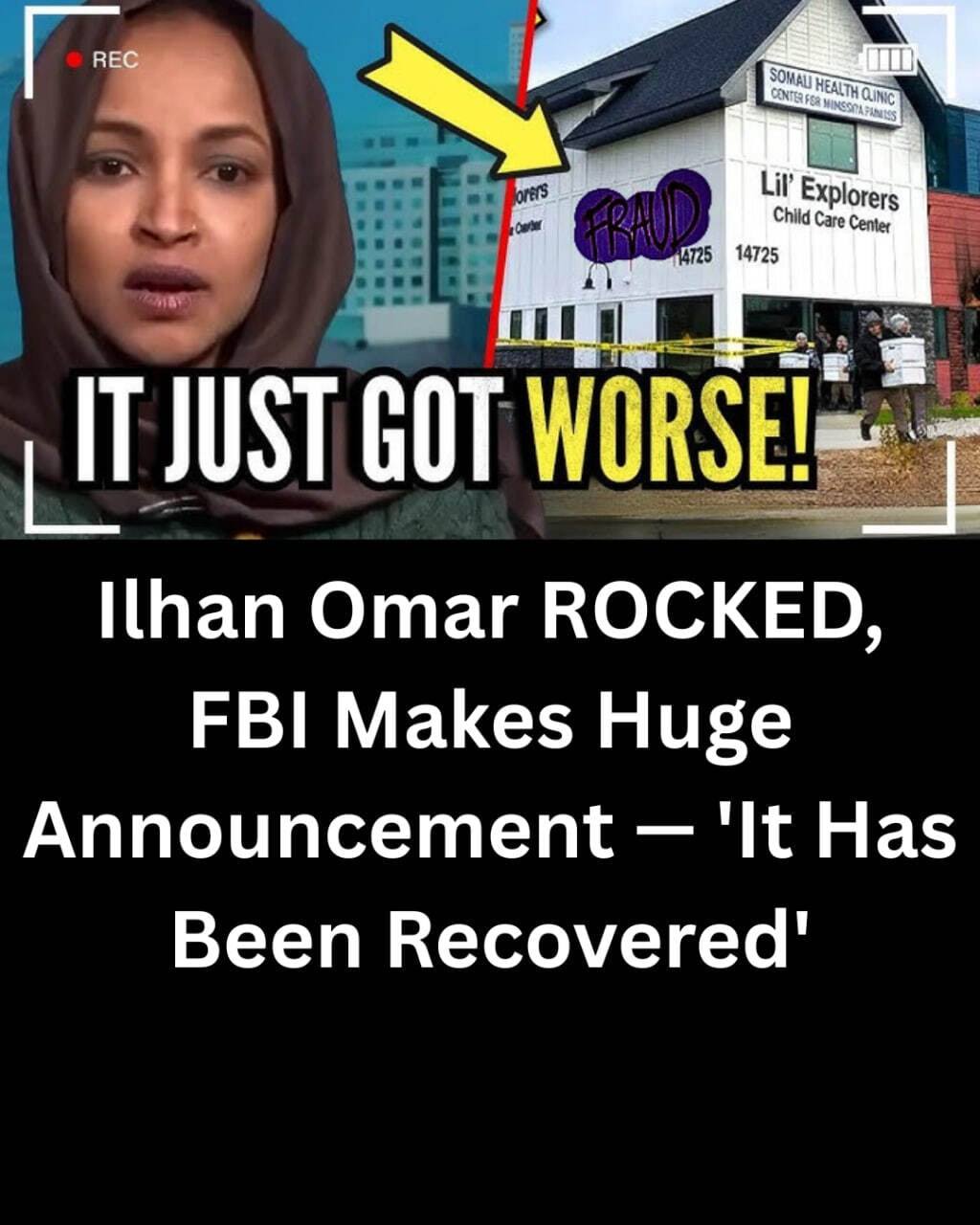
FBI Expands Minnesota Fraud Probe, Raising Questions About Ilhan Omar’s Finances
The accumulation of wealth came fast—too fast, according to a growing chorus of critics and political observers tracking the financial trajectory of Representative Ilhan Omar. In the six years since she arrived in Washington as a freshman lawmaker in 2019, the Minnesota Democrat’s financial disclosures have revealed a dramatic increase in personal net worth, sparking intense debate over the mechanics of that transformation and the role of her family’s private business interests. At the center of this scrutiny is Omar’s husband, Tim Mynett, and Rose Lake Capital, a venture capital management and consulting firm he leads. Established in 2022, the firm has seen a valuation trajectory that analysts describe as highly unusual for a nascent private entity. In a short window, Rose Lake Capital reportedly ballooned from near obscurity to a valuation estimated as high as $25 million, despite earlier disclosures showing minimal initial assets.
The “Quiet Scrub” of Rose Lake Capital
As federal investigations into the massive Minnesota social services fraud scandal intensified throughout late 2025, eagle-eyed observers noted a curious shift in the firm’s digital footprint. Rose Lake Capital’s website reportedly removed references to several high-profile Democratic figures previously listed as advisory board members or officers.
The scrubbed names included veteran political operatives, finance officials, and former ambassadors. While none of these individuals have been charged with any crime, their sudden removal from the firm’s public materials during a period of heightened federal scrutiny has fueled intense speculation regarding the firm’s communication strategy and its network of influence.
A “Sprawling” Federal Investigation
The backdrop to these financial questions is the “Feeding Our Future” scandal, described by federal prosecutors as one of the largest pandemic-era fraud schemes in U.S. history. The investigation centers on the alleged siphoning of hundreds of millions of dollars from federal child nutrition programs intended to support families during the COVID-19 lockdowns.
According to federal indictments, the scheme was built on a foundation of systemic deception:
-
Fabricated Records: Submission of fake invoices and rosters for tens of thousands of meals never served.
-
Shell Nonprofits: The creation of “front” organizations designed to receive and launder federal reimbursements.
-
Personal Enrichment: Prosecutors allege that diverted funds were used to purchase luxury real estate and personal assets rather than feeding hungry children.
As of late 2025, federal authorities have indicted more than 78 defendants, with a majority already pleading guilty to crimes including wire fraud, money laundering, and conspiracy.
Legislative Intent vs. Criminal Abuse
Representative Omar, whose district encompasses many of the sites where the alleged fraud occurred, has not been charged with any crime. There is no public evidence suggesting she personally profited from the illicit schemes. However, her legislative record has become a focal point of the controversy.
Omar was a key proponent of the Meals for Every American Learner Support (MEALS) Act, which expanded federal access to nutrition programs during the pandemic. While she has defended the measure, stating she has “no regrets” about supporting a program designed to feed children, critics point to the fact that many implicated nonprofits operated within her district. While campaign contributions and public appearances at certain sites are documented, investigators emphasize that association and timing do not equate to criminal participation.
[Table of Feeding Our Future Investigation Status – Late 2025]
| Metric | Status / Figure |
| Total Defendants Indicted | 78+ |
| Guilty Pleas | Majority of Defendants |
| Core Allegations | Wire Fraud, Money Laundering, Theft |
| Omar’s Legal Status | Not Charged / No Evidence of Profit |
“The Tip of the Iceberg”
Federal law enforcement officials, including FBI leadership, have characterized the current public disclosures as merely “the tip of the iceberg.” This phrasing suggests that the sophisticated mechanisms used to conceal financial flows—including scrubbed websites, missing documents, and abandoned daycare centers—may point to an even broader web of misuse still under investigation.
For voters in Minnesota and observers in Washington, the story has evolved into a case study on the vulnerabilities of emergency government spending. It raises fundamental questions about the vetting of nonprofits, the transparency required of public officials’ family businesses, and the difficulty of maintaining accountability when speed is prioritized over security.
As prosecutors continue to follow the money, the convergence of Omar’s personal financial growth and the historic fraud probe in her backyard remains a defining political and legal narrative in 2026.
In the high-stakes corridors of Washington and the fractured political landscape of Minnesota, a sweeping federal investigation into pandemic-era relief fraud has cast a long, complicating shadow over the career of Representative Ilhan Omar.
Federal authorities, led by the Department of Justice and the FBI, have designated the probe a top-tier priority. At its heart is a staggering sum: millions in federal taxpayer dollars—originally earmarked to feed vulnerable children during the COVID-19 lockdowns—that investigators say were siphoned off in a historic display of corruption.
The Legislative Catalyst: The MEALS Act
Central to the ongoing debate is the MEALS for Every American Learner Support Act, a piece of legislation championed by Omar. Designed to bridge the nutritional gap during school closures, the Act expanded the reach of federal child nutrition programs, allowing schools and affiliated nonprofits to distribute meals with unprecedented speed.
Omar has remained steadfast in her defense of the policy, asserting that her support was rooted in a moral imperative. “Every child deserves access to healthy meals, especially during unprecedented school disruptions,” she stated, maintaining that the law fulfilled a critical humanitarian need.
However, federal prosecutors offer a grimmer post-mortem. They argue that the very administrative flexibility intended to streamline aid created “loopholes” that bad actors exploited. Rather than purchasing food, these individuals allegedly redirected funds toward personal luxuries, including real estate portfolios and corporate expansions that had nothing to do with hunger relief.
Scrutiny of Personal and Political Ties
The investigation’s reach has touched Omar’s personal life, specifically focusing on her husband, Tim Mynett, and his firm, Rose Lake Capital. Disclosures indicate the firm experienced a meteoric rise in valuation during the same period the fraud occurred. While neither Omar nor Mynett have been charged with any crime, federal agents have reportedly been mapping the intricate connections between Minnesota’s political fundraising networks and the nonprofit sector.
Critics and political opponents suggest that the MEALS Act inadvertently built a “highway for exploitation,” alleging that individuals with ties to Omar’s campaigns may have benefited from the systemic mismanagement. Supporters, conversely, dismiss these claims as a partisan attempt to “politicize” a widespread criminal conspiracy that involved scores of bad actors across the state, many of whom had no link to the congresswoman.
“The Tip of a Very Large Iceberg”
The narrative took a definitive turn following public comments from FBI Director Kash Patel, who assumed oversight of the bureau’s major investigations last year. Patel, known for a blunt and assertive leadership style, characterized the current findings—which include over 78 indictments and dozens of convictions—as “just the tip of a very large iceberg.”
Patel confirmed that federal agents are moving beyond initial arrests to untangle a web of money laundering, corporate shell structures, and sophisticated transfer schemes. While Patel avoided naming Omar as a specific target, his “iceberg” analogy suggests the investigation is expanding into deeper, more institutional layers.
The Societal Stakes
For the residents of Minnesota, the stakes are not merely political. The “Feeding Our Future” scandal represents a dual tragedy: the literal theft of resources from children in need and the subsequent erosion of public trust in government safety nets.
As lawmakers and regulators nationwide study the Minnesota case to harden emergency relief programs against future abuse, Omar remains at the center of a national conversation on ethics and oversight. Whether her legislative actions were a noble effort undermined by criminals or a failure of due diligence remains a question that will likely be settled not just in the court of public opinion, but through the ongoing, high-pressure work of federal investigators.